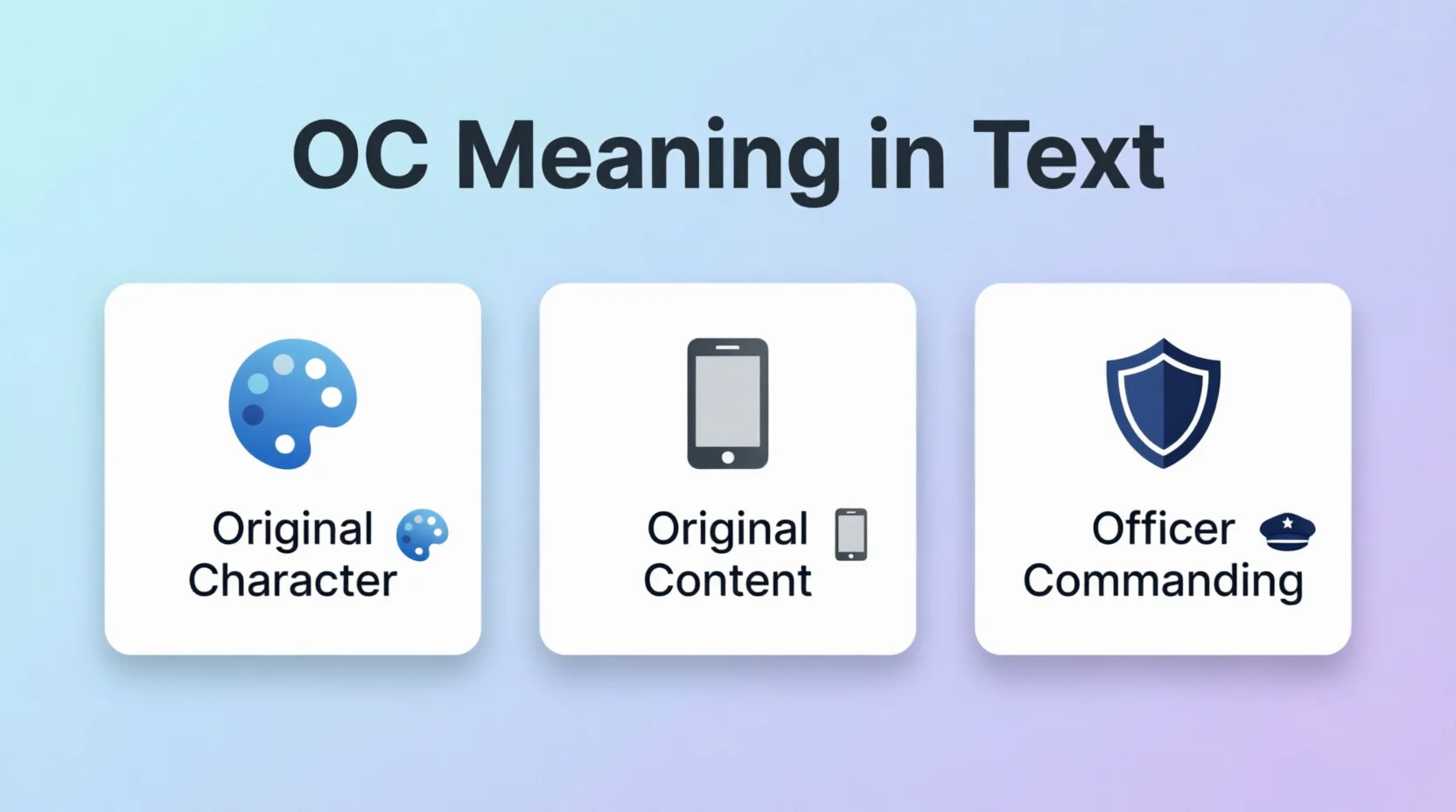
OC in text slang usually means “Original Character” or “Original Content,” depending on context. People use it in chats, social media posts, fandom discussions, and creative communities to describe something made from scratch or a character created by someone.
You’ll commonly see “OC” on TikTok, Instagram, Discord, Reddit, and fandom spaces where users share art, stories, or roleplay content. It is not formal language—it’s internet slang that helps people quickly label creative work. Many users search for it because it appears in bios, comments, or captions without explanation.
OC is widely used online because it is short, flexible, and fits both creative and social media conversations. Understanding its meaning depends heavily on context, which is why beginners often get confused when they first see it.
If you’ve seen “OC” in a message or post and weren’t sure what it meant, this guide will break it down clearly with examples, usage, and real-life chat situations.
OC Meaning in Text Explained Simply
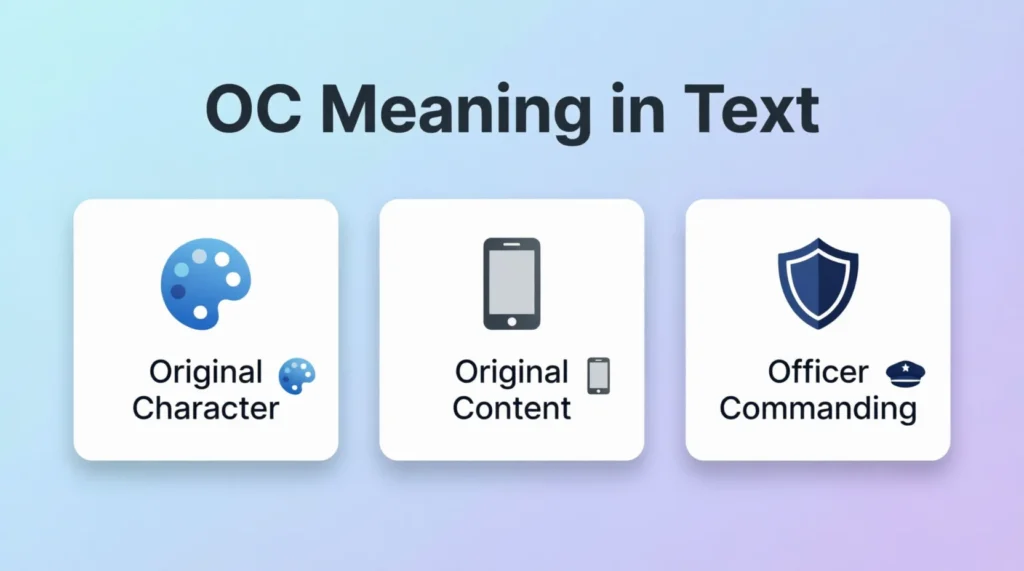
OC meaning in text slang: OC generally stands for “Original Character” or “Original Content.” The meaning changes depending on where and how it is used.
- Original Character (OC): A fictional character created by a user
- Original Content (OC): Content created by the user, not copied
What does OC mean in chat: In chat conversations, OC often refers to someone’s character in storytelling, roleplay, or fandom discussions.
OC slang meaning: OC is internet shorthand used mainly in creative communities. It is not a casual everyday slang like “lol” or “idk.”
OC meaning on Snapchat: Rare, but used in creative storytelling or when sharing edits or characters.
OC meaning on TikTok: Very common in fandom edits, character introductions, and storytelling videos.
OC meaning on Instagram: Used in art posts, reels, and captions showcasing original artwork or characters.
OC meaning on WhatsApp: Mostly used in group chats involving friends discussing stories, drawings, or roleplay.
Type of term:
- Acronym
- Creative slang
- Context-based meaning
- Not offensive or meme-only slang
OC Across Social Media Platforms
TikTok
On TikTok, OC is extremely popular in fandoms and storytelling content. Creators post videos like “My OC reveal” or “OC story part 1.” Tone is creative and expressive.
On Instagram, OC appears in art posts, character designs, and reels. Artists use hashtags like #OCart or #OCcharacter.
Snapchat
On Snapchat, OC is used in private chats or story posts among friends sharing creative ideas.
On WhatsApp, OC appears in group chats discussing stories, drawings, or roleplay ideas.
Discord
Discord is one of the biggest platforms for OC usage. Users create entire servers dedicated to OCs, roleplay, and storytelling.
OC Meaning in Different Contexts
OC changes meaning depending on the conversation:
1. Original Character Context
Used in fandoms, anime communities, or storytelling groups.
Example:
“I made a new OC for my story.”
2. Original Content Context
Used by creators posting their own work.
Example:
“This video is OC, please don’t repost.”
3. Roleplay Context
Used in online roleplaying communities.
Example:
“My OC is a warrior from a fantasy world.”
4. Art Community Context
Used by digital artists and illustrators.
Example:
“OC sketch dump posted!”
OC Tone & Usage Variations
Even though OC is not emotional slang, tone depends on usage.
Creative Tone
A: “Check out my new OC design!”
B: “Looks amazing, love the style!”
Excited Tone
A: “I finally finished my OC story!!”
B: “Can’t wait to read it!”
Casual Tone
A: “This is my OC, just a random idea.”
B: “Cool concept.”
Roleplay Tone
A: “My OC enters the village quietly.”
B: “The guards notice your arrival.”
Supportive Tone
A: “I’m nervous about sharing my OC.”
B: “Don’t worry, it looks great!”
OC Chat Examples (10–15 Realistic Conversations)
A: “Do you have an OC?”
B: “Yeah, I created one for my story.”
A: “Your OC design is cool!”
B: “Thanks, I worked hard on it.”
A: “Is this OC or fan art?”
B: “It’s OC, completely original.”
A: “Tell me about your OC.”
B: “She’s a space explorer with magic powers.”
A: “Can I draw your OC?”
B: “Of course, go ahead!”
A: “My OC is getting popular online.”
B: “That’s awesome!”
A: “What’s your OC personality?”
B: “Shy but powerful.”
A: “This OC story is deep.”
B: “Glad you liked it.”
A: “Is your OC based on you?”
B: “A little bit, yes.”
A: “OC drop incoming!”
B: “Can’t wait 🔥”
A: “I need help designing my OC.”
B: “Let’s brainstorm ideas.”
A: “Your OC lore is interesting.”
B: “Thanks, I built it over time.”
OC Grammar and Language Role
- Part of speech: Noun (abbreviation)
- Sentence role: Subject or object (“My OC is powerful”)
- Replaces full sentence? No, but can represent full idea in fandom context
- Position in sentence: Usually before or after description (“OC design,” “my OC”)
- Formal vs informal: Informal, creative internet language
- Tone impact: Neutral but expressive in creative contexts
How to Reply When Someone Says “OC”
Funny Replies
- “Your imagination is on fire 🔥”
- “Another legendary OC spotted!”
Serious Replies
- “That’s a well-developed character.”
- “Nice original idea, well done.”
Flirty Replies
- “Is your OC single though?”
- “I like your creative mind 😏”
Neutral Replies
- “Looks good.”
- “Nice character design.”
Is OC Rude or Inappropriate?
- Is OC rude? No, it is completely neutral
- Is it offensive? Not at all
- Is it a bad word? No
- Can you use it in school? Yes, in art or creative discussions
- Can you use it at work? Only in creative industries
OC is safe, professional in creative spaces, and widely accepted online.
Who Uses OC Most?
- Age group: Mostly 13–30
- Gen Z vs Millennials: Gen Z uses it more in fandom culture
- Regions: Global usage (US, UK, Asia, etc.)
- Most common platforms: TikTok, Instagram, Discord, Reddit
Origin of OC and Internet Culture
- Origin: Started in fandom and fanfiction communities
- Growth: Became popular in anime, gaming, and writing forums
- TikTok boost: Expanded through storytelling videos and character edits
- Discord influence: Roleplay servers made OC culture mainstream
- Internet culture role: OC is now central in creative online identity building
OC vs Fan Character
Understanding the difference helps avoid confusion:
- OC (Original Character): Fully created by user
- Fan character: Based on existing franchise (like anime or games)
Example:
- OC = A completely new superhero
- Fan character = A Marvel-inspired hero
Why OC Is Popular Online
- Easy way to share creativity
- Helps organize storytelling ideas
- Builds online identity in fandoms
- Encourages collaboration between artists
Tips for Using OC Correctly
- Always clarify if OC means character or content
- Use hashtags like #OC or #OCart when posting
- Don’t confuse OC with unrelated slang
- Be clear in storytelling communities
Common Mistakes With OC
- Assuming OC always means “original content”
- Using it in non-creative contexts
- Mixing OC with canon characters without explanation
- Not giving context in chats
Fun Facts About OC
- Many viral TikTok stories start as OC ideas
- Some OCs become so popular they get fan art
- OC communities are among the most creative online spaces
- People sometimes build entire fictional universes around one OC
Conclusion
OC is a powerful and flexible internet slang term used mainly in creative communities. Whether it means Original Character or Original Content, its meaning depends on context. From TikTok storytelling to Discord roleplay and Instagram art posts, OC helps people express creativity and share original ideas easily.
Understanding OC makes it easier to follow online conversations, enjoy fandom content, and even create your own characters confidently.
descover more post
148+ Cockatiel Puns That Will Make You Chirp with Laughter …
184+ California Puns That Will Make You Smile Like Sunshine …
169+ Rocket Puns That Will Launch Your Laughter to New …
Author

Ruby Cole is the creator and lead author of PunsMood.com, a popular online humor and wordplay platform dedicated to delivering fresh, clean, and clever puns, jokes, and list-style humor content for readers worldwide. Ruby combines her passion for language with professional SEO and content-marketing expertise to craft engaging, shareable articles that appeal to both humor lovers and search engines alike.