If you’ve seen “TMW” in a message or comment and felt a bit confused, you’re not alone. Internet slang changes fast, and abbreviations like this often appear without explanation. One day you’re texting normally, and the next you’re decoding three-letter codes like a detective.
The good news is that “TMW” is actually simple once you understand it. In this guide, we’ll break down the meaning of TMW in text, how people use it in real conversations, and what it usually implies on social media platforms like TikTok, Snapchat, Instagram, and messaging apps.
Everything is explained in easy English so anyone can understand it—even if you’re completely new to internet slang.
What Does TMW Mean in Text?
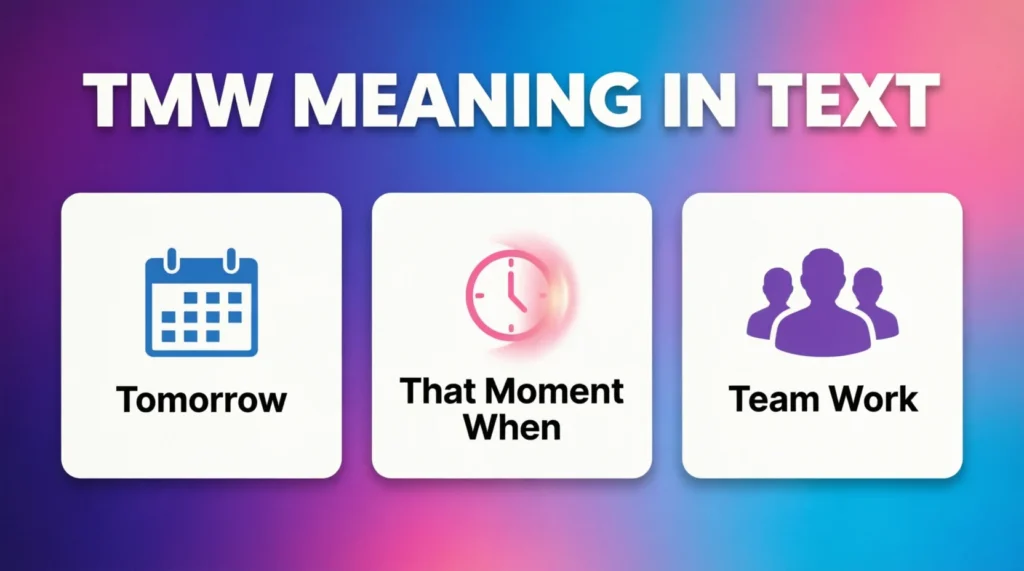
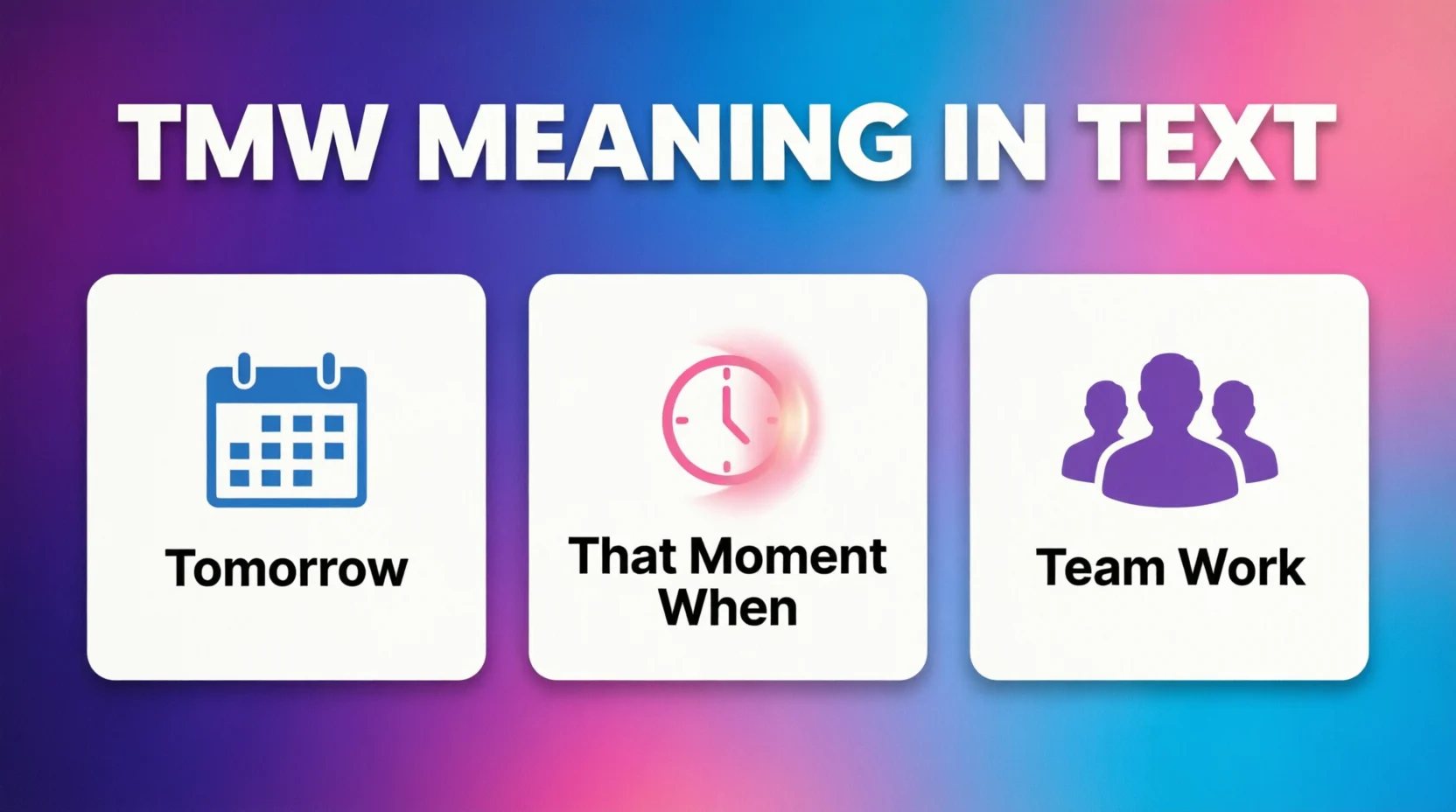
“TMW” stands for “That Moment When.”
It is used to describe a specific situation, feeling, or relatable experience. People usually use it to introduce something funny, awkward, emotional, or relatable that happens in everyday life.
Think of it as a way of saying:
- “You know that feeling when…”
- “That situation where…”
- “When this happens…”
But in a much shorter, more casual way.
Simple Explanation of TMW
At its core, TMW is used to set up a relatable moment.
Instead of explaining a full story, people shorten it and start with “TMW” followed by a situation that others can understand or laugh at.
It’s often used in memes, captions, and casual texting.
How TMW Is Used in Text Messages
Let’s look at how people actually use “TMW” in everyday conversations.
Example 1: Funny Situation
TMW you wave back at someone who wasn’t waving at you
👉 Meaning: An awkward, relatable moment many people experience.
Example 2: Relatable Daily Life
TMW you forget what you were about to say
👉 Meaning: A common memory slip that everyone can relate to.
Example 3: Emotional Moment
TMW you hear your favorite childhood song
👉 Meaning: A nostalgic feeling.
Example 4: Social Media Caption
“TMW you check your phone right before it dies at 1%”
👉 Meaning: A frustrating but relatable moment.
Example 5: School or Work Humor
“TMW the teacher says ‘this won’t be in the exam’ but it is”
👉 Meaning: Shared student frustration.
Why People Use TMW Instead of Full Sentences
The internet loves shortcuts. “TMW” became popular because it helps people:
- Save time
- Make posts shorter
- Create relatable content
- Write captions quickly
- Sound more natural online
It also fits perfectly with meme culture, where short, punchy text works best.
TMW in Social Media Culture
“TMW” is not just a texting abbreviation. It is heavily used across social media platforms.
On TikTok
People use “TMW” in captions or on-screen text to introduce funny or relatable videos.
Example:
“TMW you try to act normal but trip in public”
On Instagram
Used in captions or memes.
Example:
“TMW you finally sit down and someone calls you”
On Snapchat
Used in private chats or stories to describe daily life moments.
Example:
“TMW you open Snapchat and forget why you came here”
On Twitter (X)
Used in short posts to express relatable thoughts.
Example:
“TMW you press ‘reply all’ by mistake…”
Emotional Meaning Behind TMW
Even though “TMW” looks simple, it can express different emotions depending on context:
1. Humor
Most common use. People share funny everyday situations.
2. Embarrassment
Used for awkward or cringe moments.
3. Nostalgia
Used when remembering the past.
4. Frustration
Used for annoying situations.
5. Relatability
Used when something happens that many people experience.
So “TMW” is not just a phrase—it’s a way of sharing human experiences quickly.
TMW vs Similar Internet Slang
To understand “TMW” better, it helps to compare it with similar expressions.
1. “When you…”
Example: “When you forget your password again”
👉 Very similar, but less structured.
2. “That feeling when…”
Example: “That feeling when you finish exams”
👉 Almost identical, but slightly longer.
3. “Relatable”
Used as a reaction instead of introducing a situation.
Example: “So relatable 😂”
4. “MOOD”
Used to express strong agreement with a feeling.
Example: “Sleeping all day MOOD”
TMW is basically the “setup version” of these reactions.
Common Mistakes People Make with TMW
1. Using It Like a Full Sentence
“TMW I am hungry” is not wrong, but it often needs context to make sense.
Better:
“TMW you’re hungry but don’t want to cook”
2. Forgetting the Relatable Part
TMW works best when others can relate to it. If it’s too personal, it loses meaning.
3. Using It in Formal Writing
“TMW” is not suitable for emails, academic writing, or professional communication.
4. Overusing It
Like all slang, using it too much can make it feel repetitive.
Real-Life Examples of TMW
Here are more natural examples to help you fully understand how it works.
Everyday Life
- “TMW you leave your house and forget your keys”
- “TMW you sit down and immediately get called again”
- “TMW you open the fridge 10 times expecting new food”
School/College
- “TMW you study the wrong chapter before the exam”
- “TMW the teacher says ‘this is important’”
- “TMW you finish exam early but can’t leave”
Technology Moments
- “TMW your phone autocorrect changes everything wrong”
- “TMW WiFi stops working right when you need it”
- “TMW your phone lags during an important message”
Emotional Moments
- “TMW you hear an old song and feel everything again”
- “TMW you miss someone but can’t text them”
- “TMW you remember something embarrassing from years ago”
Why TMW Became So Popular
The rise of “TMW” is connected to internet culture.
People today prefer:
- Short content
- Quick emotional expression
- Relatable humor
- Meme-style communication
“TMW” fits perfectly into all of these.
It allows users to compress a whole story into a few words while still making others understand the feeling instantly.
How to Use TMW Correctly
If you want to use “TMW” naturally, follow these simple tips:
1. Keep It Relatable
Make sure others can understand the situation.
2. Keep It Short
Don’t turn it into a full paragraph.
3. Use Humor When Possible
It works best with funny or awkward situations.
4. Match the Platform
Use it casually on social media or texting—not in formal communication.
5. Add Emojis (Optional)
Emojis help show tone:
- 😂 for funny moments
- 😭 for dramatic feelings
- 😩 for frustration
- 💀 for extreme humor
Is TMW Still Used in 2026?
Yes, “TMW” is still widely used in 2026.
Even though new slang appears constantly, “TMW” remains popular because:
- It’s simple
- It works in memes
- It describes relatable moments well
- It is easy to understand globally
It continues to appear in TikTok captions, Instagram memes, and casual texting.
When You Should Avoid Using TMW
Even though it’s common, there are times when you should avoid it:
- Formal emails
- Professional messages
- Serious conversations
- Academic writing
- Sensitive topics
Using slang in the wrong place can make communication unclear or inappropriate.
Quick Summary of TMW Meaning
If we simplify everything:
- TMW = That Moment When
- Used to describe relatable situations
- Common in memes and texting
- Works best for funny, emotional, or awkward moments
- Popular across social media
Final Thoughts
“TMW” is one of those internet expressions that perfectly captures modern communication. Instead of explaining long stories, people use it to highlight shared experiences in a short, relatable way.
Whether it’s something funny like spilling coffee or emotional like hearing an old song, “TMW” helps turn everyday moments into something others can instantly understand.
Now that you know what it means, you’ll start noticing it everywhere—on TikTok captions, Instagram posts, and even in casual chats with friends. And next time you see “TMW,” you won’t need to guess—you’ll already know it’s about a relatable moment worth sharing.
descover more post
134+ Tea Puns That’ll Steep You in Laughter 2026 – PunsMood –
185+ Star Puns That Will Shine Brighter Than Your Day 2026
What Does TW Meaning in Chat Mean in Text Real Meaning …
Author

Ava Reed (real name Sabrina Scherer) is a widely read German author, blogger, and storyteller best known for her engaging novels in the genres of romance, young adult, fantasy, and contemporary fiction. She began her writing journey in 2012 as a passionate book blogger and quickly grew a dedicated audience through her honest voice and love for stories.