IDC in chat stands for “I don’t care.” It’s a quick, informal way people express indifference, lack of interest, or emotional distance in a conversation.
You’ll see “IDC” everywhere—WhatsApp chats, Instagram DMs, Snapchat replies, TikTok comments, and even gaming chats. It’s one of those internet shortcuts people use without thinking, which is why it can sometimes feel confusing or even a little rude depending on the tone.
If you’ve received a message like “IDC” and weren’t sure how to take it, you’re not alone. This guide breaks down exactly what it means, how people use it, and how you should respond in different situations.
IDC Full Form in Chat Explained
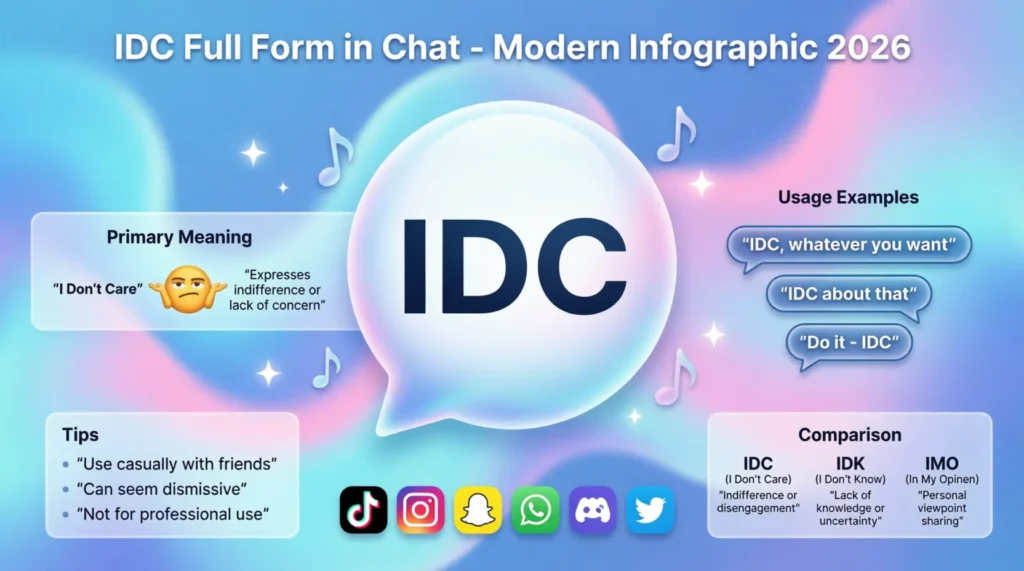
The full form of IDC in chat is “I don’t care.” It’s a shorthand phrase used to show that someone is not interested, not emotionally invested, or doesn’t have a preference.
Unlike longer messages, IDC is quick and direct. That’s both its strength and its weakness—it saves time, but it can also sound blunt.
For example:
- “What do you want to eat?”
- “IDC”
Here, the person simply means they’re fine with anything. But depending on tone, it might also sound dismissive.
Why People Use IDC in Text Messages
People use IDC for a few simple reasons:
- Speed: It’s faster than typing a full sentence
- Casual tone: Fits relaxed, everyday chats
- Low effort response: When someone doesn’t want to think too much
- Emotional distance: Sometimes used to avoid deeper conversation
In today’s fast messaging culture, short replies like IDC are very common. But meaning depends heavily on context.
IDC Meaning Across Social Media Platforms
IDC Meaning on WhatsApp
On WhatsApp, IDC is usually casual. Friends use it when they’re okay with anything or don’t have a strong opinion.
Example:
“Movie or dinner?”
“IDC, you choose”
Tone: Neutral or relaxed
IDC Meaning on Snapchat
On Snapchat, IDC can feel more emotional. Since chats are quick and personal, it may sound cold if not used carefully.
Example:
“Why didn’t you reply?”
“IDC”
Tone: Can feel dismissive
IDC Meaning on Instagram
On Instagram, IDC appears in comments or DMs. It’s often used casually or even humorously.
Example:
“IDC what people say, this is my favorite song”
Tone: Confident or carefree
IDC Meaning on TikTok
On TikTok, IDC is often part of trends or captions.
Example:
“IDC if it’s cringe, I love it”
Tone: Bold, expressive, sometimes funny
IDC in SMS (Text Messages)
In traditional texting, IDC is straightforward. It can sound neutral or slightly blunt depending on the situation.
Different Meanings Based on Context
IDC doesn’t always mean the same thing. Tone changes everything.
1. Neutral Use (No Preference)
“I don’t mind either option.”
Example:
“Tea or coffee?”
“IDC”
2. Emotional Use (Upset or Distant)
“I’m not interested anymore.”
Example:
“Do you want to talk?”
“IDC”
3. Confident Use (Self-expression)
“I don’t care what others think.”
Example:
“IDC what they say, I’m doing this”
4. Lazy Reply (Low Effort)
“I don’t want to decide.”
Example:
“Where should we go?”
“IDC lol”
Real Chat Examples of IDC
Here are practical, real-life style conversations:
A: “What should we watch tonight?”
B: “IDC, you pick”
A: “Do you like this outfit?”
B: “IDC, wear what you like”
A: “Why are you ignoring me?”
B: “IDC”
A: “Pizza or burger?”
B: “IDC honestly”
A: “People are talking about you”
B: “IDC”
A: “Should I go to the party?”
B: “IDC, it’s your call”
A: “You forgot my message”
B: “IDC, it wasn’t important”
A: “Let’s meet today”
B: “IDC, I’m free”
A: “Do you care about this?”
B: “IDC anymore”
A: “Choose a color”
B: “IDC 😂”
Is IDC Rude or Disrespectful?
This is where things get interesting.
IDC is not inherently rude, but it can easily sound rude depending on tone.
When it’s NOT rude:
- With close friends
- In casual decisions
- When used playfully
When it CAN be rude:
- During serious conversations
- When someone is emotional
- When used repeatedly
Example:
Someone shares feelings → “IDC”
This can feel hurtful.
How to Reply When Someone Says IDC
Your response should match the situation.
Funny Replies
- “Wow, such passion 😂”
- “Your decision-making skills are impressive”
Neutral Replies
- “Alright, I’ll decide then”
- “Okay, I’ll pick something”
Serious Replies
- “You don’t seem interested, is everything okay?”
- “If you don’t care, I’ll handle it”
Slightly Sarcastic Replies
- “Good to know you care so much”
- “Thanks for the enthusiasm”
IDC vs IDK vs ILY – Common Confusion
Many people mix these up:
- IDC = I don’t care
- IDK = I don’t know
- ILY = I love you
They look similar but have completely different meanings. Using the wrong one can totally change a message.
Grammar and Language Role of IDC
- Type: Abbreviation / chat slang
- Function: Replaces a full sentence
- Position: Usually stands alone or at the end of a sentence
- Formality: Informal only
Examples:
“I honestly IDC”
“IDC about that”
It simplifies communication but removes emotional nuance.
When You Should NOT Use IDC
There are situations where IDC is a bad idea:
- During arguments
- When someone is sharing feelings
- In professional or work chats
- In formal communication
Instead, use softer alternatives like:
“I’m okay with anything”
“It doesn’t matter to me”
Who Uses IDC the Most?
- Age group: Mostly teens and young adults
- Gen Z: Uses it frequently and casually
- Millennials: Use it but more selectively
- Global use: Common worldwide
It’s part of everyday internet language now.
Origin of IDC
IDC comes from early internet chat culture, where people shortened phrases to type faster.
It became popular in:
- SMS texting
- Online forums
- Messenger apps
Over time, it spread to all major platforms and became a standard abbreviation.
IDC in Modern Internet Culture
Today, IDC reflects more than just words—it shows attitude.
- Confidence: “IDC what people think”
- Disinterest: “IDC anymore”
- Casual tone: “IDC, you decide”
It’s simple, but powerful.
Better Alternatives to IDC
If you want to sound softer or more polite, try:
- “I don’t mind”
- “Up to you”
- “I’m okay with anything”
- “Your choice”
These keep the meaning but avoid sounding cold.
Final Thoughts
IDC is one of the most common chat abbreviations, and its meaning is simple: “I don’t care.” But the way it’s used can completely change how it feels.
In friendly chats, it’s harmless and casual. In serious moments, it can come across as distant or even rude. That’s why understanding context is key.
If you use IDC wisely—and know how to read it—you’ll avoid misunderstandings and communicate more clearly in everyday conversations.
descover more post
147+ Apricot Puns That Will Make You Smile and Giggle 2026
195+ Hilarious Rabbit Puns That Will Make You Hop with …
What Does HML Mean in Text Real Meaning Examples 2026
Author
Ava Reed (real name Sabrina Scherer) is a widely read German author, blogger, and storyteller best known for her engaging novels in the genres of romance, young adult, fantasy, and contemporary fiction. She began her writing journey in 2012 as a passionate book blogger and quickly grew a dedicated audience through her honest voice and love for stories.