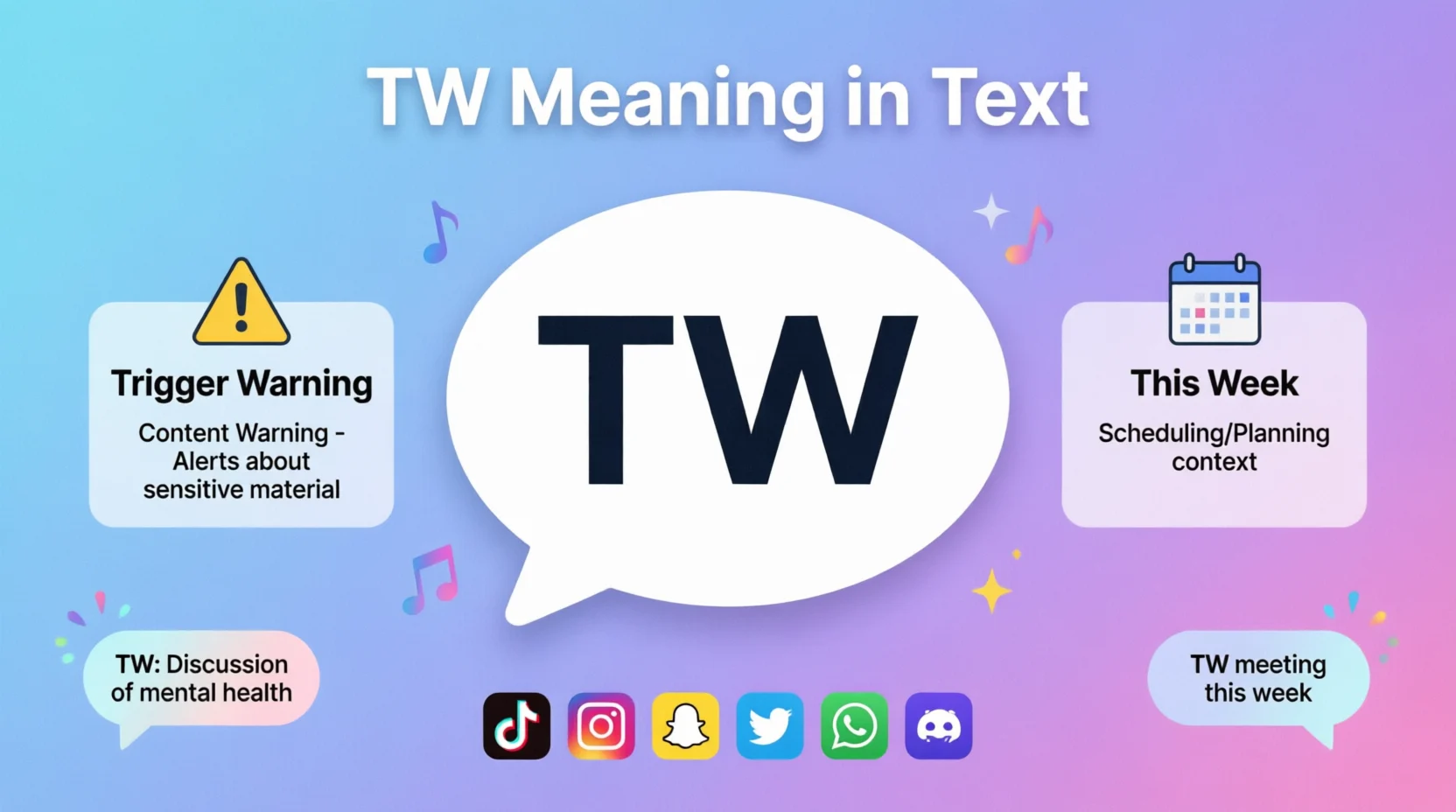
If you’ve spent time on social media or reading online posts, you’ve probably seen “TW” pop up before certain messages. Maybe it was at the start of a tweet, a caption, or even a comment. If you didn’t know what it meant, you’re not alone.
Internet slang can feel confusing at first, especially when the same abbreviation can have more than one meaning. But don’t worry—this guide will explain everything about “TW” in a simple, clear way.
By the end, you’ll understand what “TW” means in text, when people use it, and how to use it correctly yourself.
What Does TW Mean in Text?
“TW” usually stands for “Trigger Warning.”
It’s used to alert readers that the content that follows may be sensitive, upsetting, or emotionally intense.
You’ll often see it before topics like:
- Violence
- Abuse
- Mental health struggles
- Self-harm
- Death or trauma
The purpose is simple: to give people a chance to prepare themselves or skip the content if they want.
Simple Explanation of TW
Think of “TW” as a heads-up.
It’s like saying:
- “Be careful, this might be upsetting”
- “Sensitive topic ahead”
- “Read only if you’re okay with this”
It’s not meant to scare people—it’s meant to respect their feelings.
Why People Use TW Online
The internet is a place where people share real experiences, including difficult ones. Not everyone is ready to read certain topics at any moment.
“TW” helps by:
- Giving emotional warning
- Showing empathy
- Allowing choice
- Creating a safer space online
For example, someone who has experienced trauma might want to avoid certain topics. A trigger warning helps them do that.
How TW Is Used in Text and Social Media
“TW” is usually placed at the beginning of a message.
Example 1: Social Media Post
“TW: discussion of anxiety and panic attacks
Today was really hard for me…”
👉 The warning comes first so readers can decide whether to continue.
Example 2: Tweet
“TW: violence
This movie has some intense scenes…”
👉 Used before describing something graphic.
Example 3: Story Caption
“TW: eating disorder
Sharing my recovery journey…”
👉 Lets viewers know the topic is sensitive.
Example 4: Chat Message
“TW: sad topic
Can I talk about something serious?”
👉 Even in private conversations, it can be used to check in with someone.
Is TW Always About Serious Topics?
Most of the time, yes—but not always.
Sometimes people use “TW” in a lighter or even humorous way.
Example:
“TW: Monday morning 😭”
👉 This is joking. It’s not a real warning.
So while “TW” is usually serious, context matters.
Other Meanings of TW
Although “Trigger Warning” is the most common meaning, “TW” can sometimes stand for other things depending on context.
1. “Twitter”
Some people use “TW” as a short form for Twitter.
Example:
“I saw this on TW today”
👉 Meaning: Twitter
2. “Trigger Word”
Less common, but sometimes used in discussions about specific words that may upset people.
3. “That’s Weird” (Rare)
In casual chats, a few people may use “TW” to mean “that’s weird,” but this is not widely used and can confuse others.
How to Know Which Meaning Is Correct
The meaning depends on context.
Ask yourself:
- Is it at the beginning of a serious message? → Likely “Trigger Warning”
- Is it talking about social media? → Possibly “Twitter”
- Is it used casually in chat? → Could be something else
In most cases, especially online, it means Trigger Warning.
When Should You Use TW?
You don’t need to use “TW” all the time—but there are situations where it’s helpful.
Use TW When:
- Talking about trauma or abuse
- Discussing mental health struggles
- Sharing graphic or emotional content
- Posting something that may upset others
Avoid Using TW When:
- The topic is normal or light
- You’re in a formal or professional setting
- It doesn’t add any value
Overusing it can make it lose meaning.
TW vs CW: What’s the Difference?
You might also see “CW” online.
CW = Content Warning
Both are similar, but there’s a small difference:
- TW (Trigger Warning): Strong emotional triggers
- CW (Content Warning): General sensitive content
Example:
“CW: spoilers” → Not emotional, just informative
“TW: self-harm” → Emotionally sensitive
In many cases, people use them interchangeably.
How TW Is Used on Different Platforms
Used in captions or slides before sensitive content.
Example:
First slide: “TW: mental health”
Next slides: Personal story
TikTok
Often appears as text on screen at the start of a video.
Example:
“TW: flashing lights”
Twitter (X)
Very common at the start of tweets discussing serious topics.
Used in posts and titles, especially in discussion communities.
WhatsApp / Messaging
Used more personally.
Example:
“TW: serious topic, can I vent?”
Tone and Respect Matter
Using “TW” is not just about slang—it’s about being thoughtful.
When you use it correctly, you:
- Show respect
- Build trust
- Make conversations safer
But if used incorrectly, it can:
- Confuse people
- Feel unnecessary
- Reduce its importance
Common Mistakes to Avoid
1. Using TW for Everything
Not every topic needs a warning.
2. Forgetting to Add Context
Just writing “TW” without saying why isn’t helpful.
Better:
“TW: anxiety”
3. Using It as a Joke Too Often
Occasional humor is fine, but overdoing it can make it seem insensitive.
4. Ignoring Audience
Think about who will read your message.
Real-Life Examples of TW in Conversations
Here are some natural examples to help you understand better.
Example 1: Emotional Sharing
“TW: depression
I’ve been struggling a lot lately…”
Example 2: Asking Permission
“TW: serious topic
Are you okay if I talk about something heavy?”
Example 3: Informative Post
“TW: violence
This documentary shows real footage…”
Example 4: Light Humor
“TW: exams next week 😭”
Example 5: Awareness Post
“TW: eating disorders
Let’s talk about body image…”
How to Respond to TW
If someone uses “TW,” respond with awareness.
Good Responses:
- “Thanks for the warning”
- “I appreciate the heads-up”
- “I’ll read when I’m ready”
If You’re Not Comfortable:
- It’s okay to skip
- You don’t have to respond
Is TW Still Relevant in 2026?
Yes, very much.
As online conversations become more open and personal, “TW” is still widely used. It helps people navigate content safely and respectfully.
It’s especially important in:
- Mental health discussions
- Storytelling content
- Awareness campaigns
Why TW Matters in Digital Communication
The internet connects millions of people from different backgrounds. What feels normal to one person may be difficult for another.
“TW” helps bridge that gap.
It’s a small addition that can make a big difference in how people experience content.
Tips for Using TW Naturally
If you want to use “TW” correctly, keep it simple:
- Place it at the beginning
- Clearly mention the topic
- Use it only when needed
- Stay respectful
Example:
“TW: anxiety and panic attacks”
That’s enough—no need to overcomplicate it.
Final Thoughts
“TW” most commonly means Trigger Warning, and it plays an important role in online communication today. It’s used to alert people about sensitive or potentially upsetting content, giving them the choice to continue or not.
While it can sometimes have other meanings like “Twitter,” the context usually makes it clear.
If you use social media or messaging apps, understanding “TW” helps you communicate more thoughtfully and respectfully. It’s not just slang—it’s a way to show awareness and care for others.
Now that you know what “TW” means and how to use it, you’ll be able to recognize it instantly and use it naturally in your own conversations.
descover more post
193+ Gorilla Puns That Will Make You Go Bananas 2026
144+ Melon Puns That Are One in a Melon 2026 – PunsMood –
148+ Day Puns That Will Brighten Every Moment 2026
Author

Rose combines her love of creative writing with professional SEO and digital content expertise to produce articles that are both user-friendly and optimized for search engines. She works hard every day to ensure that PunsMood.com provides high-quality, well-structured, and enjoyable content that readers can easily find and share.